Kees de Hoogh
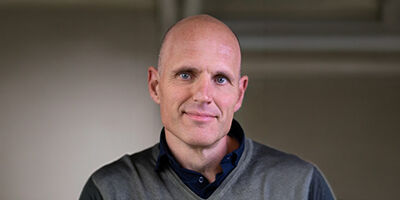
Kees is an environmental exposure scientist and Associate Professor at the Institute for Risk Assessment Sciences (IRAS) at Utrecht University. His research centres on spatial modelling and exposure assessment, with recent work on high-resolution spatio-temporal modelling using satellite and ancillary data. Together with Maartje Pronk, he supports citizen science initiatives and an open testing environment for new technologies to improve air quality monitoring in the region, contributing to data-driven solutions for healthier communities.
Within ExpACT, Kees and Maartje work on the Foodvalley measurement network. Their role is to facilitate citizen engagement by enabling residents to express what they want to know about their direct environment and to support the testing of new technologies within the network. Maartje leads the citizen science and social engagement components, while Kees focuses on exposure modelling and spatial analysis. Together, they aim to strengthen air quality monitoring and develop innovative, community-driven, data-based solutions for healthier environments.
"We hope to improve local air quality together and empower citizens to shape, with science, what truly matters in their environment"